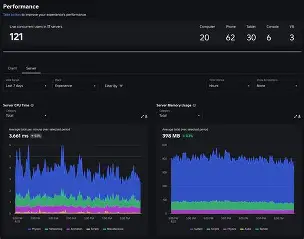
Roblox in 2026 is not just evolving in terms of content and features — it’s undergoing one of the biggest performance overhauls in its history. For years, players have complained about lag, unstable servers, FPS drops, and inconsistent performance across devices. In response, Roblox has introduced a series of major performance upgrades that are transforming how games run on the platform. These improvements affect everything from rendering and physics to networking and memory usage, making Roblox smoother and more reliable than ever before.
One of the most impactful upgrades is the introduction of Adaptive Rendering 2.0, a new system that dynamically adjusts visual quality based on a player’s hardware and current performance. Unlike older versions, which simply lowered graphics settings, Adaptive Rendering 2.0 intelligently prioritizes what matters most. It reduces unnecessary detail in distant objects, optimizes shadows, and adjusts lighting complexity in real time. This results in significantly higher frame rates, especially on mid‑range and older devices. Many players report that games which once ran at 30 FPS now run at 60 or higher.

Another major improvement is the new physics engine optimization. Roblox physics have always been CPU‑heavy, especially in games with many moving parts, vehicles, or destructible environments. In 2026, Roblox introduced a multi‑threaded physics pipeline that distributes calculations across multiple CPU cores. This dramatically reduces stuttering and improves consistency in fast‑paced games. Developers who rely on physics‑based gameplay — such as racing games, simulators, and combat experiences — have seen some of the biggest benefits.
Networking has also received a major upgrade. Roblox’s new Netcode 3.0 system reduces latency, improves hit registration, and makes multiplayer interactions more reliable. This is especially important for competitive games, where even small delays can ruin the experience. Netcode 3.0 uses smarter packet prioritization, meaning essential data — like player movement and combat actions — is processed first, while cosmetic or non‑critical data is handled afterward. As a result, games feel more responsive, even on slower connections.
Memory management has been another long‑standing issue, particularly on mobile devices. Roblox addressed this with Memory SmartLoad, a system that loads assets only when needed and unloads them when they’re no longer in use. This reduces crashes, shortens loading times, and allows larger, more detailed worlds to run smoothly on devices with limited RAM. Developers can now build richer environments without worrying as much about memory limits.
Roblox has also improved server stability through Dynamic Server Scaling. Instead of assigning a fixed amount of resources to each server, Roblox now adjusts server power based on player count and activity. Busy servers with many active players receive more resources, reducing lag and improving performance during peak times. This is especially helpful for large social hubs, roleplay games, and events that attract thousands of players.
The community reaction to these upgrades has been overwhelmingly positive. Players appreciate the smoother gameplay, fewer crashes, and more consistent performance across devices. Developers are excited because they can push the limits of what’s possible on Roblox without sacrificing stability. Many creators have already begun updating their games to take advantage of the new systems, resulting in noticeable improvements across the platform.
Overall, Roblox’s performance upgrades in 2026 represent a major step forward. The platform is becoming more polished, more stable, and more capable of supporting complex, high‑quality experiences. As Roblox continues to grow, these improvements lay the foundation for a future where performance issues are no longer a barrier to creativity.
About the Author